
Planning a Cremation Memorial in Indiana
A Guide to Permanent Memorialization After Cremation
Over the years, we have seen cremation become the most common form of disposition. Families choose cremation for many different reasons. Some appreciate the flexibility it provides, while others value the ability to scatter ashes, create personal memorials, or keep cremated remains in close proximity to family members. Regardless of the reason, cremation often leads to an important question: how can a loved one be remembered for generations to come?
For many families, creating a permanent memorial remains an important part of honoring a life and preserving family history. Some choose a traditional cemetery monument. Others might select a cremation bench, columbarium niche, family memorial, garden memorial, sculpture or another option.
Across Indiana, from Kokomo and Logansport to Indianapolis and Lafayette, cremation memorials take many forms. Some are simple and understated. Others serve as gathering places for families. The right choice often depends on cemetery regulations, family preferences, and future planning considerations. Ultimately it is about how a family wishes their loved one to be remembered.
This guide explains the most common cremation memorial options available in Indiana, along with the planning, design, and cemetery considerations families often encounter when creating a permanent memorial. Depending on where you are in this process, you may be interested in looking at how we handle Cemetery Headstones & Monuments in Indiana as well.
Types of Cremation Memorials
As we sit down with families, the first question that helps determine the conversation we will have is where the family wants to place the memorial. Some families immediately gravitate towards benches, garden art, sculpture, and boulders because they are hoping to place the memorial in a place significant to their loved one like Grandma’s garden or spreading Dad’s ashes under his tree stand.
Other families want to place the cremains in a cemetery, and they are often surprised by how many memorial options are available after cremation. Beyond traditional burial and columbarium niches, there are monuments and benches that can be designed to hold cremated remains. Families can learn more about these options in our Can Cremated Remains Be Placed Inside a Monument? article.
When considering the types of memorials, it often depends on cemetery regulations, available space, family preference, and whether future family members may eventually be included.
Regardless of where the cremated remains will ultimately rest, many families find comfort in creating a permanent place of remembrance. Whether it is a traditional cemetery monument, a memorial bench overlooking a favorite view, or a simple marker in a family garden, a memorial provides a place where stories can be shared, and memories revisited. Everyone deserves to be remembered.
Traditional Memorials Designed for Cremains
One option that is often overlooked is a traditional cemetery memorial. Many families are surprised to learn that a cremation memorial can look nearly identical to a traditional cemetery monument. In many cases, the difference is not visible at all. There are three common ways to accomplish this. Many cemeteries, including those in Carroll County, Tipton County, and Fulton County, allow cremated remains to be buried within the cemetery lot. Another option is to place the cremated remains beneath the monument within the concrete foundation. A third approach is to design the memorial itself to incorporate a cremation chamber. All three options allow for the discreet placement of cremated remains while maintaining the traditional appearance many families prefer.
Cremation Benches
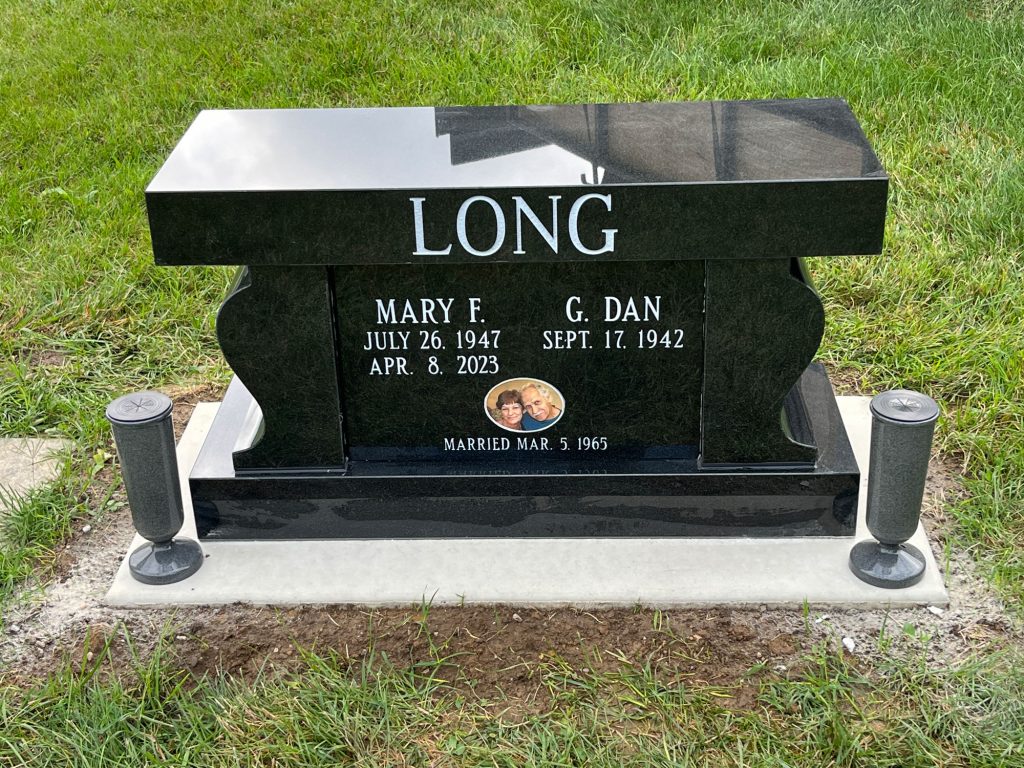
Memorial benches are another wonderful option for many families. The versatility of a bench helps in the design process. Cremation benches are often placed at homes, cemeteries, farms, and rural properties throughout North Central Indiana. If someone is considering spreading ashes in a special place, this might be a great tribute as well. When used in a cemetery, some benches are designed to incorporate cremated remains within the memorial structure itself, while others are placed above a cremation burial space. Families often choose cremation benches when they want a memorial that encourages visitors to pause, reflect, and spend time at the site.
Columbarium Niches
A columbarium contains individual niches, or openings, designed to hold cremated remains. Families considering a columbarium often discover there are significant differences between community columbariums and privately owned family columbariums. Some larger cemeteries in communities such as Kokomo, Lafayette, Marion, and Indianapolis maintain community columbariums for cremation memorialization. Additionally, private columbariums can be placed in the cemetery. Usually, we see private ones designed for two and four niches, but we have designed and placed some larger ones as well. The niche front typically includes inscriptions, names, dates, and sometimes photographs or decorative artwork. Cemetery regulations may restrict what can be added to the tile.
Family Estate Cremation Memorials
Families frequently ask whether spouses, parents, children, or multiple generations can share a single memorial. In many cases, the answer is yes. Family estate memorials are often designed to accommodate multiple generations and may combine traditional burials, cremation burials, and columbarium-style features within a single family lot. This usually creates a more cohesive memorial design. One of the advantages of cremation is the additional flexibility it provides during the design process. Family memorials can be created in a wide variety of sizes and configurations while still allowing space for future family members. This often makes it possible to create a unified memorial that reflects the family as a whole rather than planning separate memorials over time.
Garden Memorials, Sculpture, and Boulders
Some families choose to memorialize a loved one outside of a traditional cemetery setting. Garden memorials, sculptural memorials, and memorial boulders can provide a place to remember in locations such as private property, memorial gardens, churches, parks, or other approved settings. Families who plan to scatter ashes often still want a permanent place where future generations can gather, reflect, and remember. Memorial benches, garden markers, boulders, and sculptures are just a few of the options available. These memorials can range from a natural granite boulder with a simple inscription to custom-designed sculptures that incorporate meaningful symbols, artwork, or architectural elements. Because they are not always intended to mark a grave, garden memorials often offer greater flexibility in size, shape, and design than traditional cemetery monuments.
Planning a Cremation Memorial
Ultimately, planning a cremation memorial follows a similar process to any memorial. It begins with answering where the cremated remains will be placed and how the family wishes to create a permanent place of remembrance.
Families may choose a traditional cemetery burial, columbarium niche, family estate lot, or dedicated cremation section. Other selection options include a garden memorial, memorial bench, or church memorial garden if they want the memorial to be placed outside of a cemetery in northern Indiana.
Before making final decisions, families should consider cemetery regulations, future family needs, and how the memorial will be maintained over time.
Designing a Cremation Memorial
The design process for a cremation memorial is very similar to that of a traditional monument.
Most memorials include names, dates, and carefully arranged lettering. Families often choose to incorporate religious symbols, military emblems, occupational imagery, hobbies, or other meaningful artwork. Portrait etchings, engraved scenes, and custom carving may also be incorporated depending on the memorial style and granite selected. Families interested in learning more about these artistic features can explore our Carving and Engraving Methods and Etched Memorial Designs guides.
A well-designed cremation memorial balances personal expression with clarity, readability, and long-term durability. Families interested in learning how memorial ideas are developed and refined can explore our Memorial Design Process page.
Granite and Materials for Cremation Memorials
Granite remains the most widely used material for cremation memorials because of its strength, durability, and ability to withstand Indiana’s changing weather conditions. Numerous colors and finishes allow families to select a memorial that reflects the personality of their loved one.
Families interested in alternative materials may also explore memorials created from field stones, marble, sandstone, basalt, bronze, or other specialty materials. Depending on where the memorial is going, these could be wonderful options as well. We have additional resources on materials in our guide to granite alternatives.
Cemetery Regulations for Cremation Memorials
Every cemetery maintains its own rules regarding cremation memorialization. Requirements may differ significantly between cemeteries in Kokomo, Logansport, Rochester, Lafayette, and other Indiana communities. It is important to check those rules and restrictions early on in this process.
Regulations may govern:
- Monument size and style
- Cremation burial locations
- Columbarium requirements
- Foundation specifications
- Urn placement
- Installation procedures
- Decoration policies
Because cemetery regulations vary, families should always verify current requirements directly with the cemetery before making final decisions.
Serving Families Across Indiana
Whether a family chooses a traditional cemetery monument, cremation bench, columbarium niche, or family estate memorial, the goal remains the same: creating a memorial where future generations can remember, reflect, and remain connected to those who came before them.
Thoughtful planning, quality craftsmanship, and careful design help ensure that a cremation memorial becomes a meaningful part of the cemetery landscape for years to come.
If you are considering a cremation memorial and have questions about cemetery regulations, memorial options, granite selections, or design possibilities, our team would be honored to help. Since 1947, Caldwell Monument Company has assisted families throughout Howard County, Cass County, Miami County and more in creating memorials that reflect the lives, values, and stories of those they love.
Frequently Asked Questions About Cremation Memorials
Can a memorial be placed somewhere other than a cemetery?
Yes. Some families choose to place memorial benches, garden memorials, sculptures, or memorial boulders on private property, church grounds, memorial gardens, or other approved locations. Before placing a memorial outside of a cemetery, it is important to consider long-term accessibility, maintenance responsibilities, and any local regulations that may apply.
Can cremated remains be buried in a cemetery?
Yes. Many cemeteries allow cremated remains to be buried within traditional grave spaces, dedicated cremation sections, family lots, or columbarium niches. Requirements vary from one cemetery to another, so it is important to verify current regulations before making final arrangements.
Can cremated remains be placed inside a monument?
In some cases, yes. Certain memorials are designed with cremation chambers or enclosed spaces that can hold an urn or cremated remains. Cemetery regulations may restrict these options, and not every memorial style is designed for this purpose. Families interested in this type of memorial should discuss available options before the design process begins.
What is the difference between a columbarium and a cremation memorial?
A columbarium is a structure containing individual niches designed to hold cremated remains. A cremation memorial is a broader term that can include monuments, benches, garden memorials, columbariums, and other forms of permanent remembrance. A columbarium is one type of cremation memorial, but not all cremation memorials are columbariums.
Can multiple family members share a cremation memorial?
Yes. Many cremation memorials are designed to accommodate spouses, family members, or multiple generations. Family estate memorials, companion memorials, and larger columbarium structures often provide space for additional inscriptions or future urn placements.
How long do granite cremation memorials last?
Granite is one of the most durable materials available for memorialization. A properly crafted and installed granite memorial can last for centuries while maintaining its structural integrity and appearance. Painted lettering and decorative elements may require periodic maintenance over time, but the granite itself is exceptionally durable.
What does a cremation memorial cost?
The cost of a cremation memorial depends on several factors, including the type of memorial, size, granite color, artwork, engraving, and installation requirements. A simple marker may be relatively modest, while a custom columbarium, family estate memorial, or sculptural memorial can involve a greater investment. Working with an experienced memorial designer can help families explore options that fit both their vision and budget.
Connect Today
Send us a message using the form below, and we’ll be in touch shortly. We look forward to serving you.
Tried to Geocode:
Error Type:
Please be sure to follow the tutorial on how to setup the Google APIs required for the Advanced Google Map Widget.
Google Map API Key Tutorial