TLDR: Headstone etching transforms photographs and meaningful designs into permanent images on granite, creating personalized memorials that preserve a loved one’s story. Through careful image preparation, expert craftsmanship, and the right materials, Caldwell Monuments creates etched memorials that provide lasting detail, realism, and a meaningful tribute that endures for generations.
Key Takeaways:
- Etching creates highly detailed memorials. Unlike traditional carving, etching uses thousands of tiny marks to reproduce photographs, portraits, landscapes, and other meaningful images with remarkable realism.
- High-resolution, well-lit images produce the best results and allow for more accurate, lifelike etchings.
- Different etching methods offer different advantages. While hand, laser, and impact etching are all used today, Caldwell Monuments prefers impact etching for its superior contrast, control, and ability to be refined by hand.
- Jet black granite provides the best contrast for photo-realistic etchings, ensuring the finished memorial remains clear and beautiful for generations.
Over the last several decades, etched memorials have become an increasingly popular way to create deeply personal tributes.
Many families who come to Caldwell Monuments in Indiana are surprised to learn what goes into creating an etched memorial. From the initial photograph to the finished engraving, every step is carefully crafted to capture the details that make each tribute unique.
One of the most meaningful moments in the process comes when a family sees an etched portrait of their loved one for the first time. An emotional connection is immediate, and we often hear the same heartfelt response: “That really looks like them.” Seeing a familiar face permanently preserved in stone creates an impact that words alone cannot.
In many cases, that level of realism simply isn’t possible with traditional carving techniques. That’s where etching becomes an essential part of the memorial design process.
Whether it’s a cherished portrait, a favorite landscape, or a meaningful scene, etching allows memories to be preserved with remarkable detail for generations to come. Here’s how the process works.
What is Headstone Etching?
To create these photo realistic memorials, the surface of the granite must be changed in a highly controlled fashion.
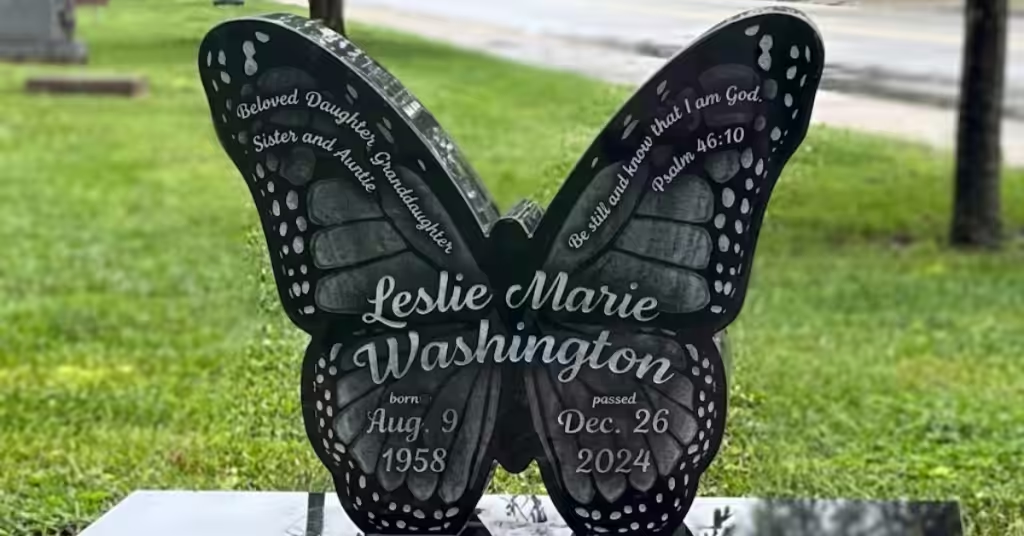
Instead of cutting deeply into the stone, like traditional carving, etching works at a much finer level. Machines use thousands of small dots to build an image.
Dots spaced tightly together make a brighter tone and dots are spaced farther apart make the image appear darker. From a distance, these points come together to form a clear, precise picture.
Up close, you can see the individual marks that create shading, contrast, and detail. Next time you see a memorial with a visual element on it, take a closer look and see if you notice the dots.
What Can Be Etched on a Memorial?
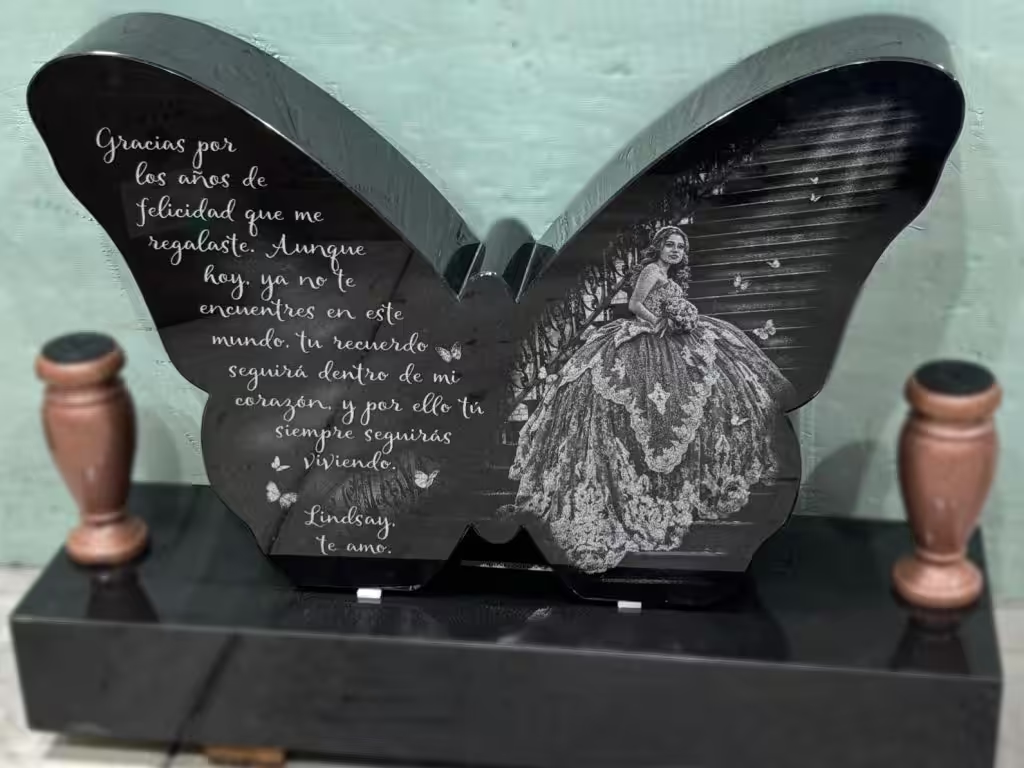
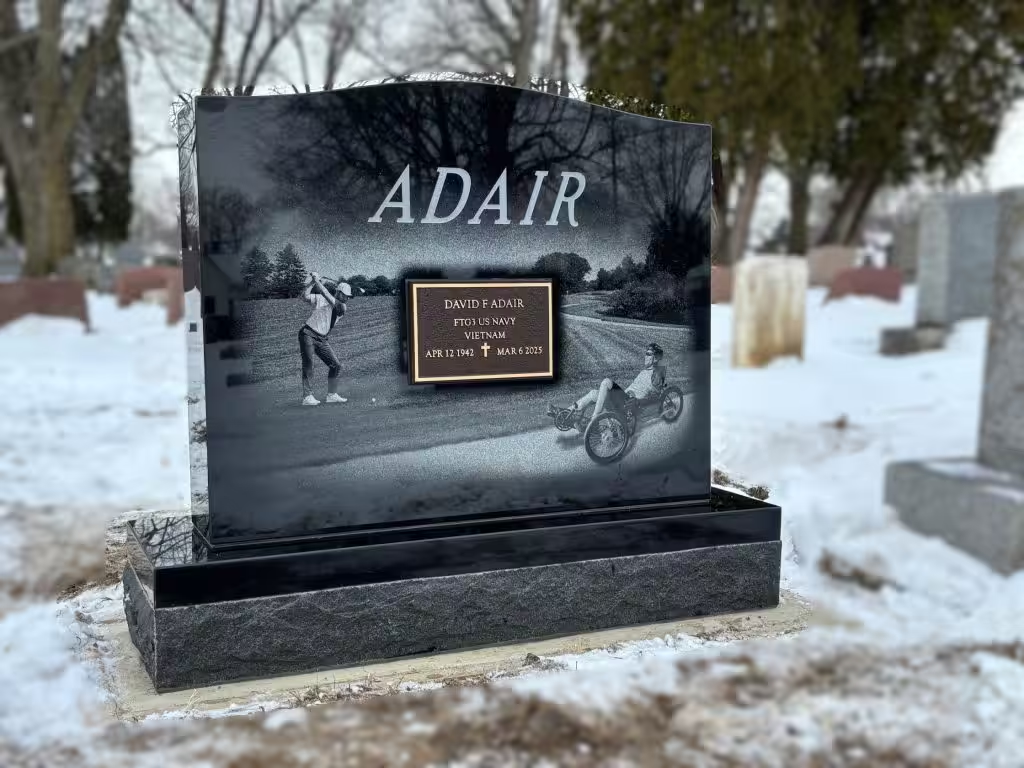
Almost anything can be etched on a memorial for the family. We have etched portraits, cars, business logos, tractors, farm scenes, quilts, hats, and more.
Each etching meant something particular and special to the family. Etching allows for a wide range of personalization.
Some of the most common choices we see in Northern Indiana include:
- Portraits of loved ones
- Family scenes or group photos
- Landscapes such as farms, lakes, or wooded areas
- Hobbies, occupations, or meaningful symbols
- Small detailed emblems, medallions, or text.
Often, the decision to use etching can be determined by the ornamentation that is wanted on the memorial. In many cases, these images tell part of the story that words alone cannot be fully expressed.
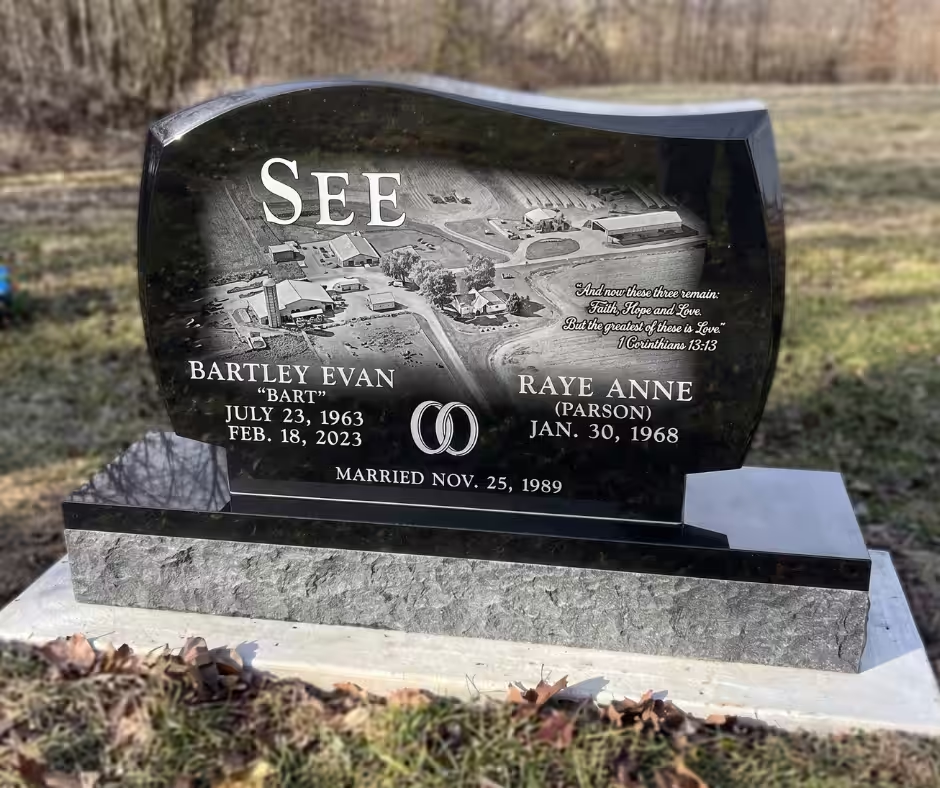
Below, you can see an example of a memorial with an aerial view of a generational family farm. The etched image demonstrates the legacy of the family that words alone do not express.
The Importance of Image Quality
Because the image provided will need to be used in our etching software, quality is of the utmost importance. Not every photo you love will translate well onto stone.
While we are physically able to etch any image, that does not mean it will reach the level of excellence and satisfaction we want for your family and the memorial.
Sometimes we will recommend using a different image so that we can produce the best etching possible. The final result of an etching depends heavily on the quality of the original image.
Rules of thumb:
- Provide the original photograph if possible. We would be happy to take a high-quality scan.
- Clear, high-resolution photos with good lighting tend to produce the best results.
- The largest file size is usually helpful. This is more data for us to use.
Avoid if possible:
- Images from Facebook or other social media sites. Those sites will often compress and reduce the image size.
- Screenshots of images.
Part of our role is helping families select and prepare images in a way that preserves their meaning while ensuring they etch well. All images need some amount of adjusting or simplification to translate well into stone.
This is a process that can take some time. If we have a high-quality image to start with, it will help the process progress nicely.


How an Etching Is Created
Once we get a request to prepare an etching and have received the reference material, we will start with digital enhancement and modification.
It is rare that we can take a photo exactly as-is and run it. All images need some level of adjustment before we etch them. Once we have the image file prepared, we send a computer rendering to the family for them to sign off on.
Finally, the stone is brought in for the etching work. There are three primary methods used to create etched images.
Hand Etching
Hand etching was the original method used to create images on memorials. In this process, a skilled artist uses a diamond-tipped tool to carefully scratch the surface of the stone.
Thousands of fine lines and marks are layered together to form a detailed image, often with the soft, artistic appearance of a pencil drawing.
Master hand etchers could transform photographs into remarkably lifelike portraits using tracing paper, exceptional craftsmanship, and countless hours of meticulous work.
While hand etching is still practiced today, advancements in technology have made machine etching the preferred method in most cases, allowing for greater precision, consistency, and efficiency.
Laser Etching
As laser technology became more accessible, laser etching quickly became a prominent technique in the memorial industry.
Laser etching uses a highly controlled beam of light to mark the surface of the granite. The intense heat from the laser creates thousands of tiny, bright dots that combine to form a detailed image. By using computer software to guide the laser head along both the X and Y axes, virtually any photograph or design can be accurately reproduced on the stone.
This technology allows for an exceptional level of detail and consistency, making it possible to create lifelike portraits, intricate landscapes, and other meaningful images that would be difficult to achieve through traditional hand-carving methods alone.
Impact Etching
As an alternative to laser etching, monument companies began experimenting with impact etching.
Like laser etching, this process uses computer technology to reproduce an image on stone. Instead of using a laser, however, impact etching relies on small diamond-tipped tools that precisely strike the surface of the granite. Each impact creates a tiny mark, and together, thousands of these marks form a detailed image.
This technique offers another way to achieve intricate designs and lifelike detail while providing flexibility for different types of granite and memorial designs.
Our Preferred Method
We have worked with all three methods over the years. When we started, we hired a hand etcher who did all our etching work. Next, we began to outsource some of the work to a laser company. Finally, we have landed on using impact etching for almost all our work. We believe it produces the best long-term results.
Impact etching offers some important advantages:
- Greater control over depth and shading
- A more natural transition between light and dark areas
- The ability to refine and adjust the image by hand
- Greatest amount of contrast in the image, even better than laser images
We take the time to evaluate every order that goes through our impact room. After the machine process is complete, we review each piece and adjust where needed. Because granite is a natural material, small variations in the stone can affect how it responds.
We can etch the same image on two different stones of the same color and get varied results. That is something most people do not expect. Because of that fact, we will often finish our etching with touch-ups by hand, which allows us to enhance the image to reach the highest level of quality before installation.
Why Granite (Especially Black Granite) Matters
Not all stone is suited for etching. Families that want to include an etching should strongly consider jet black granite.
Etching is most commonly used on darker stones, where the contrast between polished and etched areas is most visible. Although some more graphic (comic book style) art can be used on other dark colors, photo realism is not possible.
For an image to appear clearly, the surface must be:
- Smooth and highly polished
- Consistent in grain
- Capable of producing contrast
Jet black granite meets these requirements better than most materials. Its uniform composition allows etched areas to stand out clearly against the polished surface.
In lighter or more heavily grained stones, that contrast is reduced, and the image can appear less defined.
Families need to consider the style of image and etching they want. If they want photo realism, there is only one option that will meet our standards.
How Etching Works Alongside Carving
Etching is rarely used on its own. It is most often combined with traditional carving techniques.
For example:
- Names and dates may be carved into the stone
- Decorative elements may be flat carved or shape carved for depth and texture
- An etched image may be added to provide personal detail
Each technique serves a different purpose, and when used together, they create a balanced and meaningful design.
Longevity and Placement: What to Consider
Etching is a permanent, surface-based technique that alters the polished finish of the granite. Unlike printed or painted images, an etched design will not fade or disappear over time.
Because granite is an exceptionally durable and weather-resistant material, etched memorials can preserve meaningful details for generations. If you’d like to learn more about how granite compares to other memorial materials, you can read about your stone options here.
While etching is permanent, thoughtful placement is essential. An experienced memorialist can help determine the best location for each portrait, scene, or inscription to ensure it remains protected and clearly visible for years to come.
Areas we typically avoid etching include:
- Areas close to the ground
- Surfaces exposed to frequent contact
- Portions of the memorial that may be affected by lawn maintenance or flying debris
A Personal Expression That Endures
For many families, the etched imagery is the first thing people notice when they approach a memorial. A familiar face, a cherished place, or a meaningful scene creates an immediate connection and tells a story without the need for words.
Over time, these etched details often become one of the most meaningful elements of the memorial, offering comfort and helping loved ones remember the moments, people, and places that mattered most.
When combined with thoughtful design and expert craftsmanship, etching becomes more than an image. It becomes a lasting tribute that preserves memories and invites future generations to reflect, remember, and honor a life well lived.

Etching Styles Compared
Ready to Design Your Memorial?
Etching lets you tell your loved one’s story in a level of detail that carving alone can’t match.
If you’re considering an etched memorial, the Caldwell Monuments team can help you choose the right image, granite, and etching method for a design that lasts.
Frequently Asked Questions About Etching
How long does an etched image last?
When created on high-quality granite and properly placed, etched images can remain visible indefinitely. As long as the surface is not damaged and remains clean, the etching will be visible.
Can any photo be used for headstone etching?
Most photos can be adapted for headstone etching, but clearer images with good contrast tend to produce the best results. Caldwell Monuments helps guide families in selecting and preparing good quality images.
Is etching better than carving for headstones?
They serve different purposes. Carving is ideal for lettering and bold design elements, while etching is best for detailed images and portraits.
Can etched images be added to the headstone later?
Existing memorials can often be updated with etched images, depending on the available space and condition of the stone. In most cases, this would require the stone to be pulled out of the cemetery due to the requirement of the etching machines.