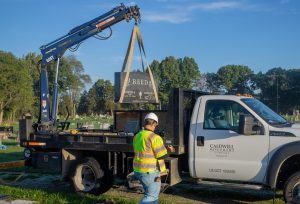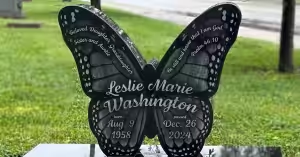

When a family walks into our office, the size of a memorial is not usually the first thing on their mind. However, it quickly becomes one of the more important decisions. Size influences not only the look of the memorial, but also what it can hold. A memorial helps tell a life’s story through the family member’s name, dates, inscriptions, and design elements. Ensuring there is space for everything the family desires will determine the quality of design. Often, the first choice is not always the correct choice. It’s discovered through the design process.
It is normal for the process to feel a bit overwhelming at first. What size is appropriate? What does the cemetery allow? How much space is needed? All of these are fair questions, and an experienced memorialist will be able to help you answer each one. You can explore the different types of headstones and monuments to see how size and style work together.
Let’s walk through how these conversations usually unfold with families.
Start with Cemetery Regulations
The first place we start when helping families through the process of selecting a memorial is at the cemetery. Most cemeteries have requirements and guidelines for memorials that will be installed there. Some cemeteries only allow grass-level markers or flat markers. Others have sections for upright memorials and sections for markers. Some cemeteries have no requirements at all. Understanding what the cemetery allows will save a lot of backtracking later and make the overall process smoother.
Some common cemetery rules, regulations, and guidelines, might include:
- Maximum width, height, and thickness
- Whether upright monuments are permitted
- Restrictions on slants, bevels, or flush markers
- Foundation requirements
- Number of individuals buried per grave space.
- Requirements for religious symbols
Some cemeteries are very specific, while others allow more flexibility. Understanding the cemetery’s restrictions is the best place to start. If all this sounds overwhelming, look for a trusted memorialist in the local area. They work in those cemeteries daily and will be able to guide you through the process.
What Needs to be Included – Now and in the Future
Once the cemetery requirements are established, the conversation begins to shift toward what the memorial is meant to hold.
Most families start with the name and dates. From there, it often grows to include relationships, a short inscription, or elements that reflect the person’s life. Then the conversation usually grows to artwork, etchings, symbols, sculptures, and overall tone of the memorial. There are no right or wrong answers here. Our goal is always to create something that truly reflects that person.
A memorial might include some of the following:
- One or multiple names
- Dates and relationships
- A short inscription or epitaph
- Religious symbols or personal artwork
- Space for future additions
A smaller stone can serve a single name and date very well. But as more elements are added, more space is naturally required.
It is also worth thinking a step ahead.
Many families do not initially consider what may need to be added in the future, such as a spouse, additional names, or future dates. Allowing space now can prevent limitations later and helps avoid the need for alteration or replacement. More cemeteries than before now allow multiple burials in a single plot. For example, one cemetery in Logansport, Indiana allows up to six cremation burials in one space. Considering whether children and other family members could be added to the space in the future can ensure the memorial is properly designed. We often refer to these as family or estate memorials, and you can read more about them here.
This does not necessarily you should choose something larger than you need. It simply means we recommend taking the time to evaluate your options and make a thoughtful decision that allows the memorial to remain complete not only today, but in the years to come.
As families talk through what they want this memorial to represent, both now and in the future, the right size usually becomes clear.
Proportion Matters More Than Size Alone
As we begin to design memorials for families, we take time to consider the proportions of the design and of the material used. A well designed and crafted memorial is not defined by size alone, but also the proportion and design elements. No matter the size, any memorial can have the potential to look spectacular and be personal.
We often tell families that size alone doesn’t determine how a memorial feels. A smaller stone can feel just as complete and beautiful when the layout is thoughtful. We ensure that lettering is sized correctly, the spacing is balanced, and nothing feels forced. Larger memorials do not work simply because there is more space. They still need to be designed with care, so they don’t feel empty or stretched. It is more about balance and personal touches than size.
If you are curious what that looks like in practice, we invite you to look through our Gallery or read more about our design process. Our goal is always the same regardless of size. How can we create something that feels natural, balanced, and meaningful for families.
Consider the Timeline
As we talk with families, one of the important pieces to discuss is how long the process will take to get a memorial completed and installed. Material availability is a large a factor when it comes to timeline. While all sizes and shapes can be created for a family, they do not all have the same availability. Over the years certain shapes and sizes have become common, which means we can receive them quicker. While others, especially unique sizes or proportions, will require additional time to produce. This will affect the overall timeline. A local memorialist will be able to point out which shapes and sizes are common and what timelines to expect right now. So, if a family is planning a memorial service or an important date is coming up, sticking with something that is easier to source may be the best decision. This is not always a deciding factor, but it is something worth being aware of early in the process.
Understanding Price and Budget
As we begin working with families, we stress that a well-crafted memorial is available for every budget. What matters the most to us as a company is how the memorial is designed and what it represents. When we understand the cost factors we need to consider for the memorial, can create something meaningful within a wide array of budgets. Two of the biggest drivers when it comes to cost are size and color. Generally, larger memorials require more material, more labor, and often a larger foundation, which naturally increases the price. Color determines where the material is quarried around the world, what the supply is, and how easy it is to acquire. For example, quarries in remotes parts of China or India will have different cost factors than those quarried in the state of Georgia. Beyond size and color, there are other factors that can influence price:
- Additional inscriptions
- Etching or detailed artwork
- Custom shapes or finishes
- Ceramic photos or bronze elements.
- Sculptural elements
Once we have discussed the size of the memorial and what matters most, we can begin to design around those priorities within the desired budget. We’ve worked with families where a simpler, well-balanced memorial felt exactly right. We have also worked with families who chose to invest more into size so there was room to tell a broader story over time. The goal is not to maximize size or spend, rather to make thoughtful decisions, so the memorial feels right without unnecessary compromise.
How Families Typically Make This Decision
In most cases, the final memorial becomes clearer as the design comes together.
As families begin looking at layouts and talking through what they would like to be included, there is usually a point where things start to click.
That clarity does not usually come from guessing. Families find the right memorial for them through conversation and assistance through the design and review process with someone who understands how to translate their view into stone.
Final Thoughts
Well, if you ask a memorialist, the right size is not about dimensions. It is about what needs to be said and making sure there is room to say it well. Telling the story is what matters. That story could be representing your kids with lady bugs in the design or choosing a font that makes you think of your dad. Size does not change our ability to tell a story. For some families everything fits on a smaller marker, and it feels complete. For others, as the conversation unfolded, it became clear we needed more space to do it right for them. That is usually how the decision happens not from a chart, but from the conversation.
Our job is to help guide that process. We may listen, lay things out, and to make sure the design feels balanced before anything is ever cut into stone. When it is right, you can tell. The layout feels settled. Nothing feels crowded. Nothing feels forced. And more importantly, the family feels good about it. That is our goal every time. If you would like help working through any of these decisions, we’re always glad to sit down and walk through it with you at any of our locations.
Headstone Sized Compared
Frequently Asked Questions About Headstone Sizes
What is the most common headstone size?
While there are common sizes, each cemetery, and even sometimes section to section within a cemetery, can be different. Memorialization has changed over the years and now offers such a wide range of sizes and finishes. This becomes a personal choice.
How big is a standard upright headstone?
Upright monuments vary widely, but a common single upright may range from 20” to 36” wide with a base that could be from 30” to 48”. The final size depends on the cemetery and the design.
Can I choose any size headstone I want?
No. Cemetery regulations will determine what is allowed, so it is important to start there. Once you know the regulations, then you understand the boundaries and often anything inside those limits are allowed.
Should I plan for future inscriptions?
In many cases, yes. Planning ahead can help avoid limitations later. It’s also important to note that future engraving cannot be paid for in advance. That work is completed and paid for when the time comes. No future work will ever be paid for in advance.
Does a larger headstone cost more?
Generally, yes. Size affects material, design, and installation. That said, the right size should be determined by purpose—not just cost.
Will a smaller headstone look too simple or incomplete?
Not at all. A smaller memorial can feel complete and beautiful when it is properly designed. Proportion, layout, and craftsmanship play a much larger role than size alone.