As we begin the process of creating a memorial with a family, we often begin designing by talking about the shape, size, and color of the stone. These are the easiest preferences for a family to identify. We then move to the design elements and ornamentation. We discuss the type of floral or symbols of faith or career. However, what often doesn’t get discussed is the types of headstone engraving and styles of carving that we have available to us.
Families across Indiana, including Kokomo, Tipton, and Logansport, often ask which engraving techniques will provide the best long-term visibility and appearance.
The carving and engraving technique determines how lettering appears, how artwork is expressed, and how the memorial will be experienced over time. Some methods emphasize clarity and tradition, while others allow for depth, texture, and artistic detail. Many of these terms are unfamiliar when a family first walk through our doors. It’s by understanding these techniques that families can make thoughtful decisions about how a life will be represented in a lasting and meaningful way.
There are several types of headstone engraving and carving techniques available, each affecting how a memorial looks, how long it lasts, and how details are preserved over time.
Flat Carving (Traditional Sandblast Lettering)
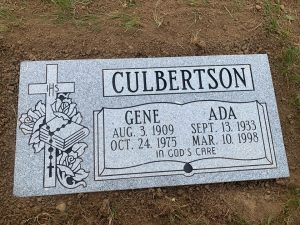
Most families already have some experience with flat carving. It is the carving technique most often used in cemeteries today. If you’ve walked through a modern section of a cemetery, you’ve seen this style. They often are outlined by a deep line cut into the stone. Those are flat carvings. They use a sandblasting process to engrave the lettering and designs into the surface of the granite to a consistent depth.
In many Indiana cemeteries, flat carving remains the most commonly used technique This technique is known for:
- Clean, crisp lettering
- Excellent readability from a distance
- Long-term durability in all weather conditions
Flat carving is commonly used for names, dates, inscriptions, and simple decorative elements. Its simplicity and clarity have made it the foundation of memorial design for generations.
Shape Carving (Dimensional Sandblast Work)
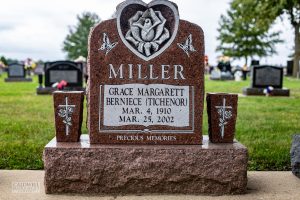
Most families quickly notice the difference between shape carving and flat carving. They will notice how the light strikes the carving, and usually remark that the memorial begins to take on a different feel. Building upon traditional sandblasting techniques, shape carving introduces varying depths within a design. Instead of carving everything to a uniform level, areas are selectively cut to create dimension and contrast.
This allows for:
- Raised or recessed elements within a design
- Greater depth and shadowing
- More visually dynamic artwork
Shape carving is often used for floral designs, religious symbols, and emblems. By creating highlights and shadows, it creates interest and dramatizes the carving. It makes you want to lean in and take a closer look at what was carved. It is a simple feature, but adds a tremendous amount of class. It provides a more expressive appearance while maintaining the durability of sandblasted work.
Sculptural Carving (Hand-Carved Elements)
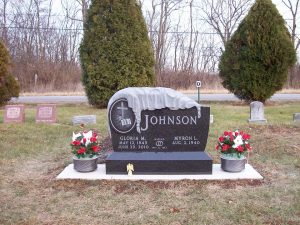
Sculptural carving represents the highest level of craftsmanship in memorialization. At this point the stone is no longer simply a memorial, but it is being transformed into art. These elements are shaped by hand using traditional tools and techniques, allowing the stone to be formed into detailed, three-dimensional features.
This technique is often chosen for:
- Statues and figures
- Drapery, textures, and architectural elements
- Fully custom memorial designs
Because each piece is individually carved, no two sculptural elements are exactly alike. Often, these are the monument pieces that capture your attention in a cemetery. They are works of art on display.
Bas Relief (Raised Carved Imagery)
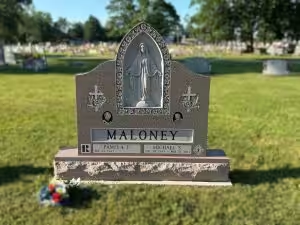
Bas relief is a carving technique in which the background is removed, leaving the design raised above the surface of the stone. The image remains attached to the stone while still achieving depth and dimension.
This method is well suited for:
- Portraits and human figures
- Symbolic or narrative scenes
- Detailed artistic compositions
Bas relief offers a balance between sculpture and engraving, allowing for expressive detail while preserving the strength and structure of the stone.
Etching (Detailed Surface Imaging)
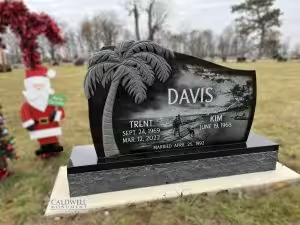
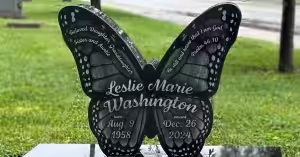
Etching is used to create highly detailed images on polished granite surfaces, most often on darker stones. Jet Black Granite provides the strongest natural contrast and has a consistent grain, which is important for clarity and detail. This is often achieved by either a laser or impact etching. After the machine creates the image, whether by laser or impact, there are usually still small imperfections. The grain which has different compositions will react differently. For this very reason, we choose to use the impact etching machine. It allows us to seamlessly blend hand etchings and machine etching, where we can go in and touch up the etchings before they are installed in the cemetery to make sure they are the highest quality of etching possible.
Etching is commonly used for:
- Portraits of loved ones
- Landscapes and meaningful scenes
- Hobbies, interests, and personal imagery
This technique allows for a level of detail that cannot be achieved through traditional carving methods alone.
Best Headstone Engraving Methods Compared
Flat carving remains the most common choice for lettering due to its durability, while etching is preferred for detailed images and portraits.
How to Choose the Right Headstone Engraving Technique
Choosing the right engraving technique depends on how you want the memorial to look, how much detail you would like to include, and how the design will hold up over time. Each method offers different strengths, and understanding those differences can help guide the decision.
For clarity and long-term readability
Flat carving remains the most widely used technique for lettering because of its depth and durability. Names, dates, and inscriptions that are deeply cut into the stone tend to remain visible for generations, even as the memorial is exposed to weather and environmental conditions.
For added depth and visual interest
Shape carving and bas relief techniques introduce dimension into a design. By creating varying depths, these methods allow light and shadow to enhance the artwork, making symbols, floral designs, and decorative elements stand out more prominently.
For detailed images and personal storytelling
Etching is the preferred method for portraits and highly detailed imagery. It allows for fine lines and shading that cannot be achieved through traditional carving alone. This technique is often used to capture meaningful scenes, hobbies, or likenesses of loved ones.
For highly customized or artistic memorials
Sculptural carving offers the greatest level of customization. These hand-carved elements transform the stone into a three-dimensional work of art and are often chosen for more elaborate or one-of-a-kind memorials.
In many cases, the most effective designs combine multiple techniques. A memorial may use flat carving for clear lettering, shape carving for decorative elements, and etching for detailed imagery. When these methods are used together thoughtfully, they create a balanced design that is both visually meaningful and built to last.
How These Techniques Work Together
Many memorials incorporate more than one technique. A design may include flat-carved lettering for clarity, shape carving for added depth, and an etched image to tell a more personal story. As we sit down with families and discuss their loved ones and what they want out of the memorial, we often find ourselves using different techniques to create different feelings. If someone wants something artistic and unique we may rely on sculptural elements and flat carved lettering. Another family might want something that would blend with an old part of the cemetery, so using bas relief carving might be the approach. If a photorealistic image is desired, then etching becomes the obvious choice.
When these methods are combined thoughtfully, they create a memorial that is both visually balanced and deeply meaningful.
How Long Do Headstone Engravings Last?
Memorial design always must be holistic. We look at where the memorial is going in the cemetery, what type of memorial it is, and what materials are available to us during this process. Each of these questions will require different approaches to ensure that the memorial stands the test of time. One of the benefits of using granite is its extremely slow erosion rate. This allows it to hold detail for hundreds, if not thousands, of years. Each carving method offers a different balance of detail and durability. Techniques that create deeper cuts in the stone tend to maintain visibility over time, while finer surface work may require thoughtful placement and material selection. For example, if something is close to the ground where people and mows may interact with it, we need to use different approaches.
Lighting, stone color, and finish all influence how a design will appear throughout the day and across the seasons. An experienced memorialist considers these factors to ensure the design remains clear and meaningful for generations.
The Importance of Craftsmanship
Once a technique is chosen, then it’s about the skill of the craftsman and designer to accomplish it. A skilled craftsman and designer considers how deeply letters are cut, how designs are proportioned, and how surfaces are finished. All of these questions play a critical role in the result.
Much of what makes a memorial stand the test of time happens long before the stone is ever carved. Careful preparation, thoughtful design, and attention to detail ensure that each element is both beautiful and enduring.
For families who want to better understand how a memorial comes together from concept to installation, we’ve outlined that process in more detail in our guide to memorial design and craftsmanship.
A Lasting Expression of a Life
Every memorial is a reflection of a life lived and remembered. The carving technique chosen helps shape how that story is seen and understood over time.
By understanding these methods, families are better prepared to create a memorial that is not only well-crafted, but truly meaningful—today and for generations to come.
Choosing the right engraving technique is an important part of creating a lasting memorial. If you’re planning a headstone in Indiana, including Kokomo, Tipton, or Logansport, our team can guide you through each option to ensure the design reflects your vision and stands the test of time. Contact us today to get started.
Frequently Asked Questions About Carving Techniques
What is the difference between carving and etching?
Carving involves cutting into the surface of the stone, creating depth that holds up well over time. Etching is a surface technique used to create detailed images, often on polished granite. We use an impact etching process, where we strike the stone with diamond tools. This changes the surface of the stone making it permanent. It is the best way to get photo realistic images in stone.
What carving style lasts the longest?
With granite memorials, the carving and etching work will last for hundreds if not thousands of years. Granite has an incredibly slow erosion rate. However, visibility is different. Deeper carving methods, such as traditional sandblasted lettering, tend to maintain clarity the longest because they are physically cut into the stone and less affected by debris, lichens (a combination of algae and fungi, often appearing black or moss like).
Can multiple carving techniques be used on the same memorial?
Absolutely. Many memorials combine techniques. For example, flat-carved lettering for readability, shape carving for added dimension, and etching for detailed imagery.
Which style is best for portraits or detailed images?
Etching is typically the best choice for portraits and highly detailed scenes. It allows for fine lines and shading that are not possible with traditional carving alone. This is most effectively done on Jet Black Granite. It is one of the granites with the highest natural contrasts.
How do I know which technique is right for our memorial?
The right choice depends on the level of detail you want, the type of stone selected, and the overall design of the memorial. An experienced memorialist can guide you through these options and help create a balanced, lasting design.
What is the most durable headstone engraving method?
Flat carving is generally the most durable because it cuts deeply into the stone, preserving visibility over time.
Is laser etching better than sandblasting?
Laser or impact etching is better for detailed images, while sandblasting is better for long-lasting lettering.