What Families Should Expect When a Memorial Is Set
Most families spend a great deal of time selecting a memorial and creating a design that reflects the life of a loved one. What many do not see is what happens after those decisions are made. Before a memorial is installed, our team handles a myriad of details to make a family’s design and decisions into reality. Understanding that process can help families know what to expect and why proper installation matters.
As families begin this journey, much of the focus naturally centers on selecting the right memorial and telling their loved one’s story. If you are early in this process, you may find it helpful to learn more about our design process and how families move from an initial idea to a completed memorial. You can also explore a broader overview in our guide to Cemetery Headstones & Monuments in Indiana, which outlines the entire process.
Those we serve in and around Kokomo, Logansport, Tipton, Peru, and other communities are often surprised by the amount of coordination that takes place behind the scenes between initial conversation to installation in a cemetery. The installation process can include connecting with the cemetery, working on the foundation, scheduling the monument’s installation, and then the actual setting of the stone. Many of these actions happen without a family realizing. This guide is meant to bring clarity to that process and help you understand what to expect with cemetery installations in Northern Indiana.
The Purpose of Proper Installation
Have you ever walked through an older section of a cemetery and noticed memorials that have tilted, shifted, or even toppled over? In some cases, the entire concrete foundation has come up out of the ground. Unfortunately, this is not uncommon in many Indiana cemeteries. Therefore, proper installation on a well-prepared foundation is an essential first step. The foundation is what protects the memorial and allows it to remain stable and presentable over time.
In Indiana, where soil conditions and seasonal changes can vary significantly from Hamilton County to Fulton County and throughout North-Central Indiana, a properly installed foundation helps guard against:
- Settling or shifting
- Tilting or instability
- Movement caused by freeze-thaw cycles
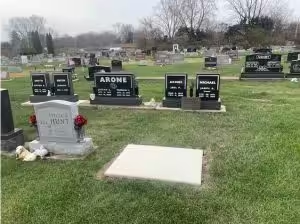
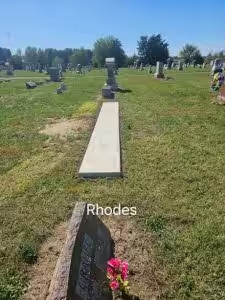
The foundation, often referred to as a footer, is designed to support the full weight of the memorial and keep it level for years to come.
One exception to this is flush markers, also known as grass markers. Some cemeteries require these to be installed without a traditional foundation. Because these memorials are smaller and sit at ground level, they can be re-leveled easily if minor movement occurs over time. This is most often seen in sections of the cemetery that are designated entirely for flat markers. If a flat marker is something you are considering, it may be helpful to look through our flat marker section to see how these memorials come together in a finished setting.
When a memorial is installed correctly, it remains upright, level, and honors the lives represented for years to come. If you would like to see examples of flush markers, we invite you to explore our memorial gallery.
Step 1: Cemetery Coordination and Approval
Early in the design process, we need to review the specific cemetery’s rules and regulations. Families are often surprised to learn that cemetery regulations can vary significantly between cemeteries in Kokomo, Logansport, Tipton, Peru, and surrounding Indiana communities. Memorial size limits, foundation requirements, and permitted monument styles are often determined by the individual cemetery rather than by state law.
Modern memorial gardens, such as Ever Rest Memorial Gardens (Logansport, IN) and Sunset Memorial Park (Kokomo, IN), require most memorials to be flat. Other cemeteries, such as Albright Cemetery in Kokomo, have relatively few monument restrictions. Either way, it is important to ensure that what is being designed will fit within those requirements. One such requirement is design approval by optaining a signature from the cemetery. We find that this is especially common with religiously affiliated cemeteries.
As part of this process, we work with both the cemetery and our internal team to confirm several key details before the foundation is ordered:
- Verifying the correct grave location
- Confirming size and regulations
- Ensuring the foundation will meet cemetery requirements
When it comes to size, these regulations can play a significant role in what is allowed and what will fit well within the space. If you are exploring options, it may be helpful to read more about choosing the right monument size and how those decisions are made.
Each cemetery operates a little differently. A cemetery in Carroll County may have different requirements than one in Howard, Miami, or Fulton County. Some require specific foundation dimensions, while others may have restrictions on monument styles or layouts. Coordination at this stage helps prevent delays and ensures the process moves forward smoothly.
Step 2: Preparing the Foundation
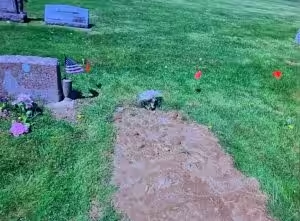
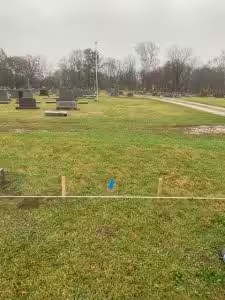
After connecting with the cemetery, the next step is placing the foundation on order. This process can look a little different depending on the cemetery. Some cemeteries work with preferred foundation providers and will handle the installation directly. Others, often more rural cemeteries, allow us to coordinate our own foundation crew to dig and pour the foundation.
Throughout much of Indiana, including Howard County, Cass County, Miami County, and Tipton County, the minimum depth for a foundation is 24 inches. In recent years, the frost line has not penetrated deeper than that. However, as a standard practice, we have historically set foundations at 30 inches. This added depth helps protect against long-term movement caused by freezing and thawing cycles, reducing the risk of shifting, heaving, or rocking over time.
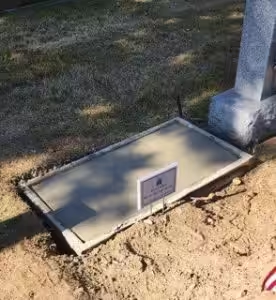
The foundation must also be properly sized to support the memorial. Many cemeteries require foundations to be set at ground level, with a concrete margin extending beyond the base of upright monuments, bevels, and slants. You can visualize this concrete margin like the matting surrounding a picture within a frame. This approach helps reduce ongoing maintenance by eliminating the need for trimming immediately around the stone.
For flush markers, cemetery requirements about foundations can vary. Some cemeteries specify that these markers need to be installed without a foundation. In cases where a foundation is permitted, we often recommend installing one below grade with the marker set directly on top, giving the appearance of the marker placed on the ground and without a visible foundation. This helps keep the marker secure and level while still allowing for easy maintenance.
A properly constructed foundation is what allows a memorial to remain stable over time. It provides the support needed to ensure the memorial stays level, secure, and well-presented for years to come.
Step 3: Scheduling the Installation
Once the memorial is completed and the foundation has been in place for a minimum of seven days, the installation can be scheduled. Even then, timing depends on several factors.
Installation may be influenced by:
- Weather conditions
- Ground conditions (especially during winter months)
- Cemetery availability or staffing
- Coordination with other memorials being set in the same area
Most families prefer to receive a call once the memorial has been set. Other families ask if they may be present for the installation. While we understand the desire to be there, scheduling can be difficult due to the variables involved. In most cases, we recommend allowing our team to complete the work and then following up once everything is in place. We would be happy to send pictures and make calls once the memorial has been installed.
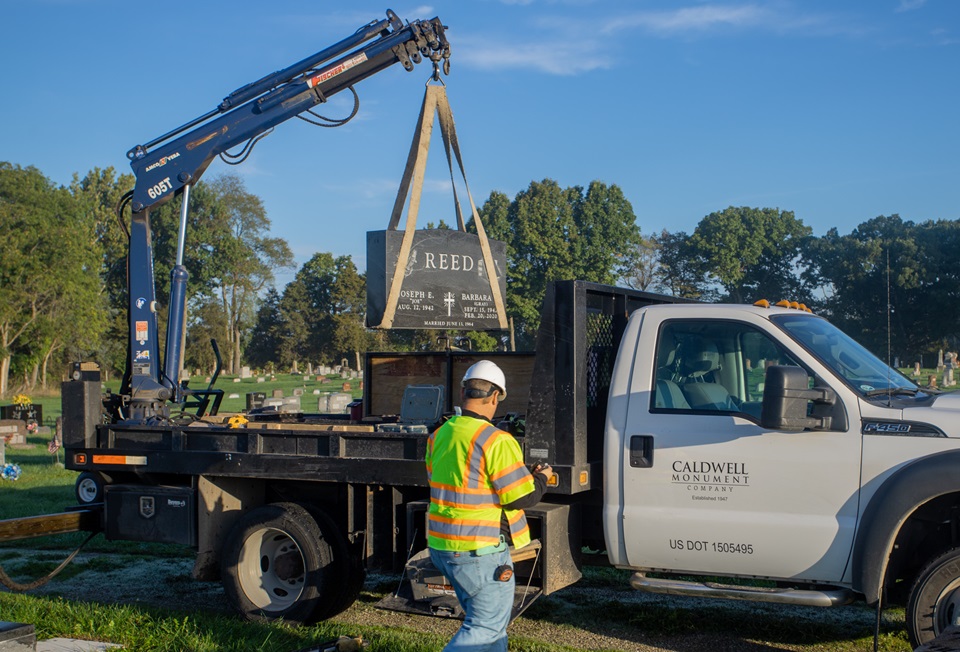
For those who do choose to attend, we simply ask that adequate space be given for the crew to work. Setting a memorial involves specialized equipment and careful handling, so maintaining a safe distance helps protect both the memorial and everyone present.
Step 4: Setting the Memorial
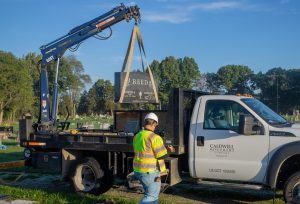
On the day of installation, whether a memorial is being installed in one of the large memorial park cemeteries near Indianapolis or a small rural cemetery in White County, careful alignment and leveling remain essential.
This process includes:
- Cleaning the foundation surface
- Applying setting compound or leveling materials
- Positioning the stone with precision
- Checking alignment and that the memorial is level from multiple angles
For upright monuments, the base and tablet must be properly aligned and secured to ensure long-term stability.
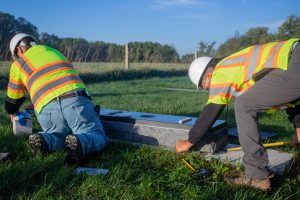
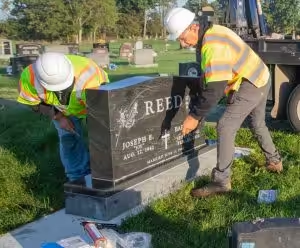
This is where craftsmanship becomes visible. A well-set memorial will appear balanced, centered, and intentional within the space.
Step 5: Final Inspection and Finishing Touches
After the memorial is set, the installation team performs a final inspection.
This may include:
- Cleaning the stone
- Removing any excess materials
- Confirming alignment and stability
- Ensuring the surrounding area is left in good condition
Every family will then receive a call from someone on our team, notifying them that the memorial has been installed. We will gladly send pictures as well.
After installing memorials throughout Indiana for decades, we have seen firsthand how proper foundations and careful setting practices affect a memorial over time. Some of the leaning monuments found in older cemeteries are the result of inadequate foundations, changing soil conditions, or installation methods that were common many years ago. Modern installation practices are designed to reduce those issues and help memorials remain stable for generations.
Why Installation Matters More Than Most Realize
Families often spend time carefully selecting a memorial—choosing the right size, color, and design to reflect a life well lived. Installation is what ensures that work endures.
A thoughtful design deserves a proper setting. When the foundation is solid and the placement is precise, the memorial becomes a lasting place of reflection. Sadly, not every memorial has be treated the same and we often see the results of poor installation practices while working in cemeteries throughout Kokomo, Logansport, Delphi, Monticello, and other Indiana communities.
Serving Families Across Indiana
At Caldwell Monument Company, we coordinate each step of the installation process with care—from cemetery approvals to the final setting of the memorial. Our goal is to ensure that every memorial is installed with the same level of attention and respect that goes into its design.
We regularly assist families throughout Howard County, Cass County, Miami County, Fulton County, Carroll County, White County, Grant County, Wabash County, Tipton County, Hamilton County, and surrounding Indiana communities.
With every cemetery operating a little differently, installation requirements can seem daunting. Restrictions can vary depending on the memorial, the location, and the cemetery’s regulations. Allow us to help you and your family navigate this process. If you have questions about an upcoming installation, foundation requirements, or cemetery approval procedures, our team is happy to help.